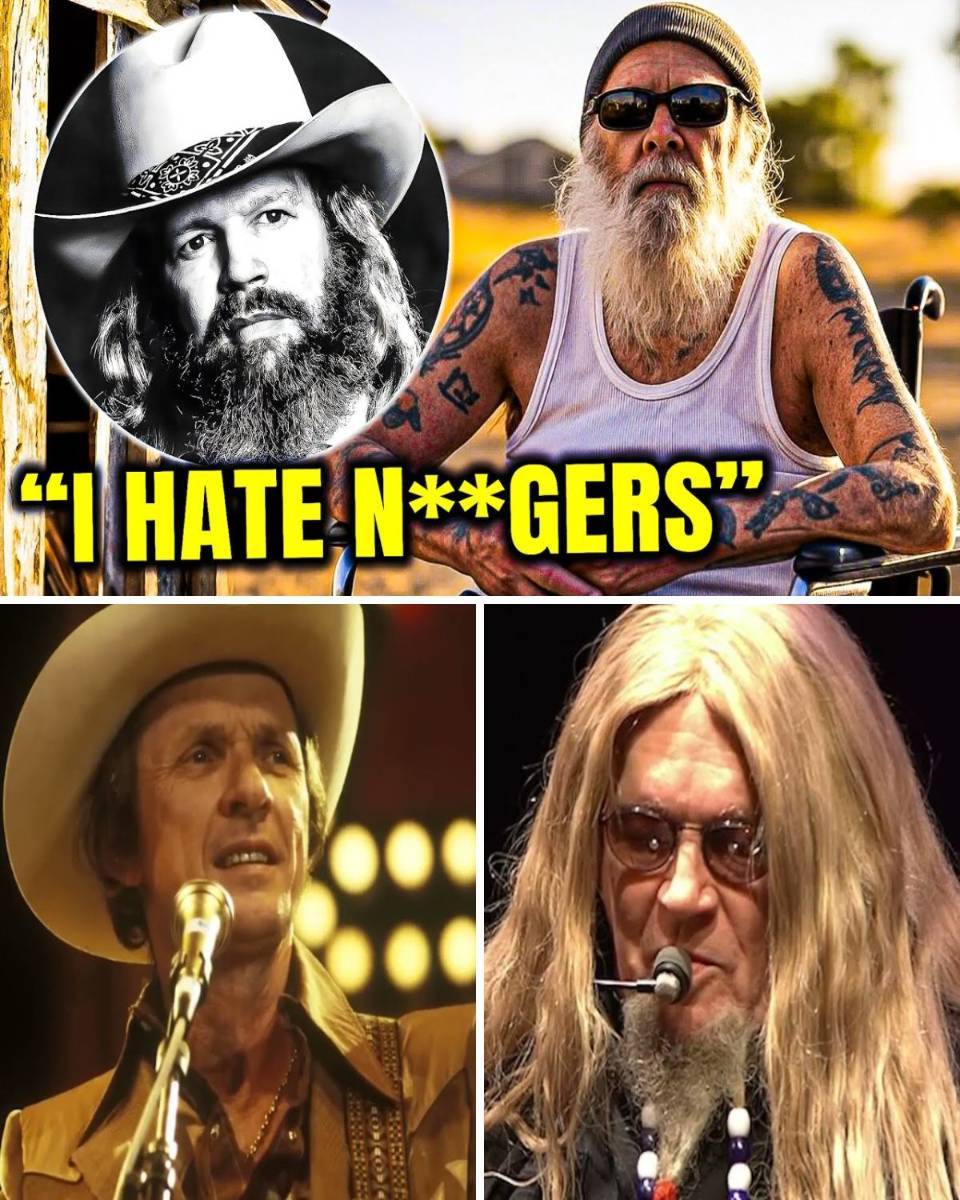
David Allan Coe, the notorious outlaw of country music, has left an indelible mark on the genre, but recent revelations about his life and struggles have cast a shadow over his legacy. As fans reflect on the tumultuous journey of this controversial figure, many are left disturbed by the darker aspects of his story that continue to unfold.
 Born on September 6, 1939, in Akron, Ohio, Coe’s life has always been a tumultuous ride, marked by rebellion and raw emotion. From a young age, he found himself ensnared in the juvenile justice system, bouncing between reform schools and prisons. But instead of breaking him, these experiences fueled his passion for music, turning his pain into powerful lyrics that resonated with the outcasts of society.
Emerging from prison in 1967, Coe arrived in Nashville with nothing but a guitar and a dream. Living in a hearse parked outside the Ryman Auditorium, he began to capture the attention of a music industry that was unprepared for his gritty and unapologetic style. His songs, steeped in the harsh realities of life, were a stark contrast to the polished sound dominating the airwaves.
 In 1970, Coe’s breakthrough came with the release of “Penitentiary Blues,” an album that shattered conventions and showcased his raw storytelling ability. His music wasn’t just entertainment; it was a reflection of his tumultuous past, a cathartic release that resonated with listeners seeking authenticity in a world of manufactured stars.
As the 1970s progressed, Coe’s career skyrocketed, thanks in part to hits like “Would You Lay with Me in a Field of Stone,” recorded by Tanya Tucker. But while he gained fame, his refusal to conform to Nashville’s standards kept him on the fringes of the mainstream. Coe’s persona, marked by flamboyant outfits and a rebellious spirit, became emblematic of the Outlaw movement, attracting a dedicated fanbase.

However, controversy was never far behind. Coe’s 𝓮𝔁𝓹𝓵𝓲𝓬𝓲𝓽 lyrics and provocative themes drew criticism, leading to a backlash that saw him distanced from the mainstream music industry. Yet, he remained unrepentant, insisting that his music was a reflection of life in all its messy, unfiltered glory.
 By the late 1970s, Coe’s reputation as an outlaw was cemented, but so were the challenges he faced. Financial struggles and legal troubles plagued him, culminating in a devastating loss when he sold the rights to his early work for a fraction of its worth. Despite these setbacks, Coe continued to tour relentlessly, his voice becoming a rallying cry for those who felt marginalized.
As the years passed, Coe’s music evolved, blending genres and collaborating with unexpected artists. His partnership with Dimebag Darrell in the early 2000s showcased his refusal to be confined by genre boundaries. Even as his health declined, Coe remained a fixture in the music world, performing in honky-tonks and biker rallies, proving that the outlaw spirit never truly dies.
David Allan Coe’s legacy is complex, marked by both brilliance and controversy. He defied the norms of country music, leaving behind a body of work that continues to resonate with those who walk their own path. As fans grapple with the darker aspects of his story, one thing is clear: Coe’s impact on the genre is undeniable, a testament to a life lived unapologetically and authentically.