The political landscape of the United Kingdom has been seismically shaken by a direct and unprecedented intervention from tech billionaire Elon Musk, who has called for the immediate dissolution of Parliament and a change of government. In a dramatic dial-in to a right-wing rally, the world’s richest man declared the current situation untenable. “There’s got to be a change of government in Britain,” Musk stated, arguing the country cannot wait for the next scheduled election. He explicitly called for a dissolution and a new national vote.
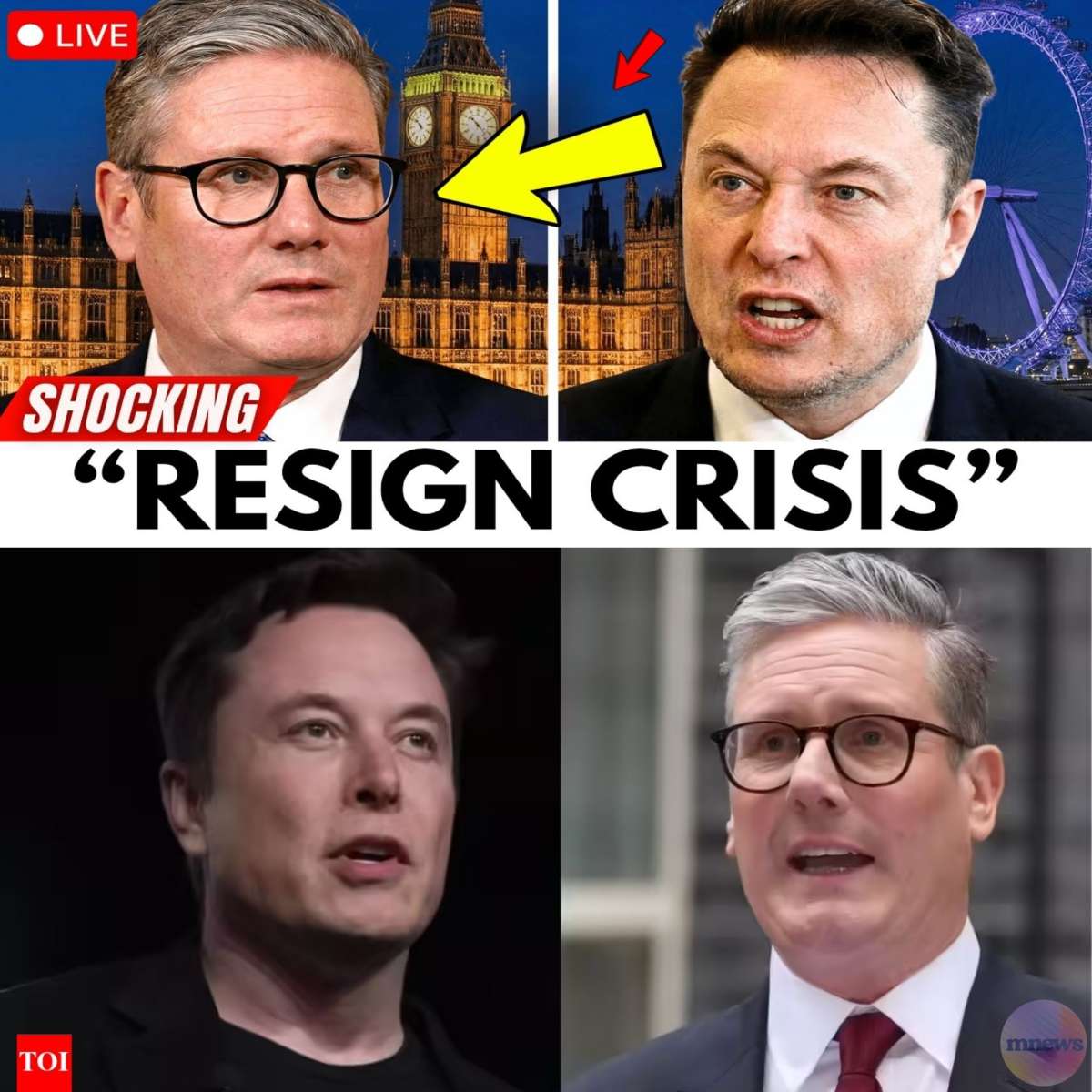
The intervention centers on a scorching critique of Prime Minister Keir Starmer’s Online Safety Act, which Musk branded a tool for “mass censorship.” He has declared his platform, X, will not comply with UK government demands to delete content, framing the law as a dangerous overreach stifling free speech.
Musk’s criticism extends to law and order, where he alleges “two-tier policing” is rampant. He contrasts robust police action against certain protests with perceived inaction against grooming gangs and violent street crime, citing over 50,500 knife attacks in a year as evidence of a collapsing social contract. The Prime Minister’s office has forcefully pushed back, with Starmer stating the online laws are vital for child protection and denying the existence of a two-tier justice system. He has insisted, “there is no dictatorship in Britain,” a statement Musk’s broadside directly challenges.

The financial and political ramifications are already being quantified. Wall Street prediction markets now signal significant turmoil, reportedly showing a 35% probability of Starmer’s resignation by mid-2026. Analysts suggest Musk’s immense influence could rapidly degrade the government’s remaining authority. Musk’s platform has become a primary battleground. A single ‘like’ from him on a video depicting police clashes reportedly catapulted it to millions of views, with polls suggesting such actions have already measurably impacted the Prime Minister’s popularity.
The billionaire has also amplified domestic protests, sharing content from farmers demonstrating against inheritance tax reforms, which he characterizes as “Stalinist land seizures.” This aligns with his wider narrative of a government at war with its own citizens. Internationally, the stakes are soaring. Silicon Valley insiders reportedly now view the UK administration as an enemy of liberty, threatening future investment. The tangible risk of a total X withdrawal from the UK is said to be haunting Whitehall strategy meetings.
Musk has highlighted a controversial early prisoner release scheme, framing it as an inversion of justice where hardened criminals walk free to make space for those convicted of online speech offenses. This, he argues, exposes a system of political persecution. The government’s proposed digital ID scheme is viewed by Musk and tech elites as a step toward a total surveillance state, potentially linking essential services to social media behavior. Critics mock official “efficiency” justifications as authoritarian.

Legacy media struggles to contain narratives shaped on X, where viral videos of violent crime undermine official statistics. The public’s trust is fracturing as the gap between government statements and viral evidence widens daily. This confrontation represents more than a clash of personalities; it is a fundamental stress test for British democracy and its place in the digital age. Musk has positioned himself as the champion of unfiltered reality against what he calls state-controlled narrative.
The economic fallout could be severe. Analysts warn of credit rating downgrades and capital flight if the UK is perceived as policing memes over machetes. The City of London is reportedly simulating the impact of a Musk-led tech boycott. With Musk commanding an audience of over 200 million, his ability to set the global agenda poses an existential threat to Starmer’s premiership. The government finds itself cornered between enforcing its laws and appeasing the digital sphere’s most powerful gatekeeper. The nation’s reputation as a bastion of free expression and stability is under immediate, intense scrutiny. This digital-age crisis of confidence has moved from online criticism to a direct demand for regime change, leaving the government in a fight for its political life.